


⭐⭐⭐⭐⭐Rated 4.9/5 by 5000+ Happy Spines
SpineCue™ Posture Corrector
SpineCue™ Posture Corrector
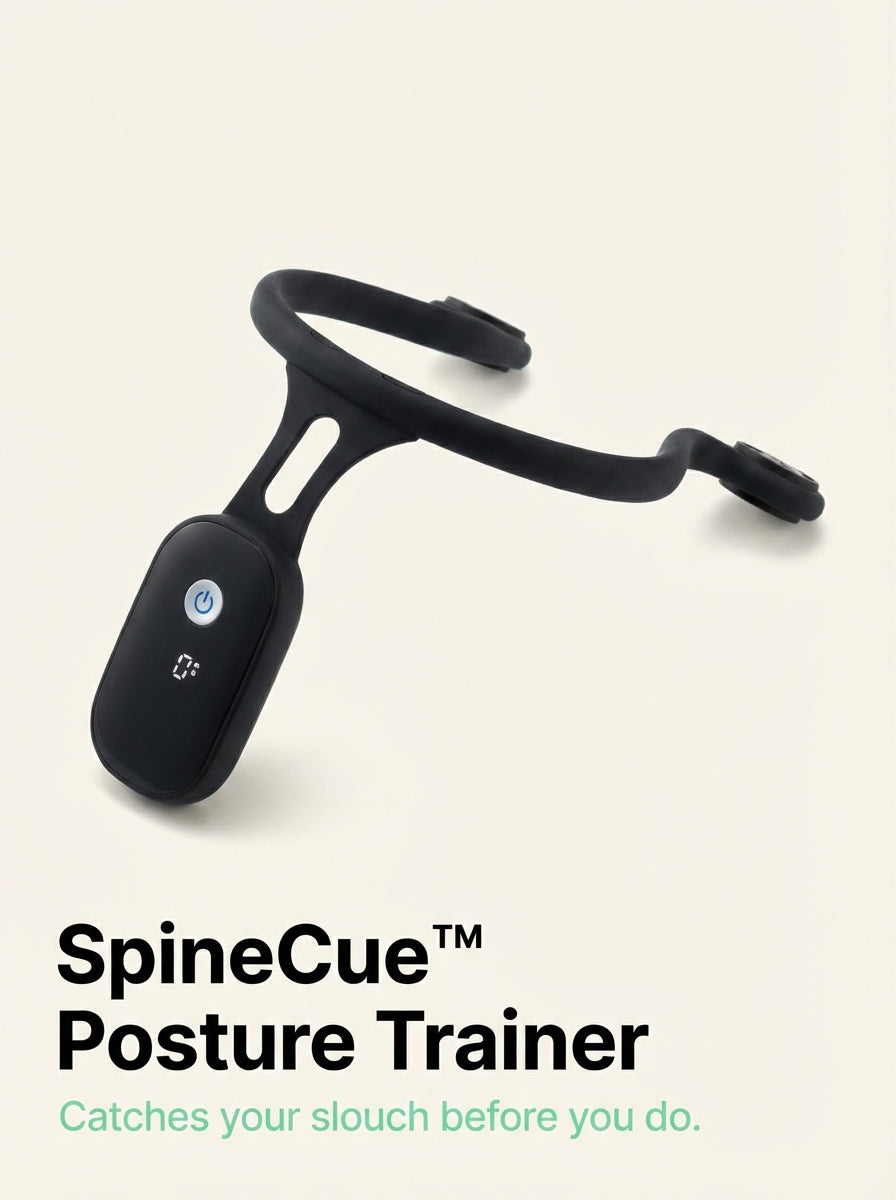
The wearable that catches your slouch before your back does.
✓ Vibrates the moment you drift — so you correct in seconds, not hours
✓ No straps, no braces, no armpit digging — just a gentle nudge
✓ Trains your awareness so upright becomes your new default
🚨Summer Sale 🚨
Couldn't load pickup availability
SpineCue™ Posture Corrector

I couldn't unsee how bad my tech neck had gotten on Zoom calls. Two weeks in and my coworker actually asked if I'd done something different — I just sit straighter now.

Tried two strap braces before this — both ended up in a drawer within a week. This just nudges me and I correct. That's all I needed.

I was skeptical it would work during deep focus sessions, but the buzz is subtle enough that I just fix and keep going — it doesn't break my flow.
 Loved by 5,000+ People
 Real-Time Vibration Cue
 60-Day Guarantee


Important Notice for New Users
Important Notice for New Users
This device is a posture awareness trainer — not a medical brace. It is designed to gently remind you to correct your posture during desk sessions, not to forcefully hold you in place.
If you experience any numbness, tingling, or increased discomfort while wearing it, remove the device immediately and consult a healthcare professional. Start with short sessions (30–60 minutes) and build up gradually.
Most Common Questions
Most Common Questions
- Will it buzz constantly? Only when you drift past your set posture threshold. The first week is calibration — it settles in.
- Will it interrupt deep work? Use it during calls, emails, and reading. Pause it for creative or high-focus sprints.
- Is it visible under clothes? The device sits discreetly at the back of the neck. Most users wear it under a shirt or light layer.
- Will I become dependent on it? No — the goal is awareness training. Most users find they need it less over time as upright posture becomes their default.
- How is this different from a brace? Braces force a position. This reminds you to find it yourself — no armpit digging, no restricted movement.
Processing & Shipping
Processing & Shipping
Orders are processed within 1–2 business days. Standard shipping typically arrives in 5–10 business days. Expedited options available at checkout.
All orders include a 30-day "Stand Taller" guarantee. If you don't feel more aware of your posture within 30 days, return it — no hoops, no hassle.


Posture Awareness Training
No Straps. No Braces.
Ships in 1–2 Days
Real-Time Vibration Cue
60-Day Guarantee
Posture Awareness Training
No Straps. No Braces.
Ships in 1–2 Days
Real-Time Vibration Cue
60-Day Guarantee
Posture Awareness Training
No Straps. No Braces.
Ships in 1–2 Days
Real-Time Vibration Cue
60-Day Guarantee
Posture Awareness Training
No Straps. No Braces.
Ships in 1–2 Days
Real-Time Vibration Cue
60-Day Guarantee
Posture Awareness Training
No Straps. No Braces.
Ships in 1–2 Days
Real-Time Vibration Cue
60-Day Guarantee
Posture Awareness Training
No Straps. No Braces.
Ships in 1–2 Days
Real-Time Vibration Cue
60-Day Guarantee
Posture Awareness Training
No Straps. No Braces.
Ships in 1–2 Days
Real-Time Vibration Cue
60-Day Guarantee
Posture Awareness Training
No Straps. No Braces.
Ships in 1–2 Days
Real-Time Vibration Cue
60-Day Guarantee
FEATURED IN


The Science 🧪
Most people think bad posture comes from weak muscles. Neuroscience says otherwise. Posture is a neurological output — the end result of a continuous communication loop between your muscles, spine, and brain called proprioception. When this system works properly, good posture is effortless and automatic.
The problem begins the moment you focus. Peer-reviewed research confirms that increased cognitive demand directly reduces your brain's ability to monitor and correct your posture. When you're deep in a task, your brain quietly deprioritizes the postural feedback loop. You don't decide to slouch. Your brain simply stops noticing.
SpineCue interrupts that drift the moment it begins. At its core is an Inertial Measurement Unit — the same sensor technology used in aerospace navigation — that monitors your trunk angle in real time. The moment your posture crosses your personal calibrated threshold, the device fires a micro-vibration to your upper back within milliseconds.
That vibration travels through your skin's mechanoreceptors — the same nerve pathways your body already uses for posture control. Your brain receives a position signal, recognizes the deviation, and triggers an automatic correction. No app. No timer. No willpower. Just an instant, body-level cue that works with your nervous system rather than around it.
The long-term goal is not dependency — it is retraining. Studies published in MDPI Sensors and the Journal of NeuroEngineering and Rehabilitation confirm that haptic feedback produces longer-lasting behavioral change than visual or auditory reminders. Every correction cycle strengthens the feedback loop that focused work suppresses — until upright posture becomes your brain's new default, with or without the device.
Trusted. Tested. Standing Taller.
-

★★★★★
I manage a team and spend probably 6 hours a day on back-to-back calls. By the end of the day my upper back was always tight and my shoulders would ache. I assumed it was stress. Turns out it was mostly just how I was sitting. Three weeks with SpineCue and the end-of-day tension is maybe 40% of what it used to be. I genuinely didn't expect results this quickly.
-

★★★★★
I'm pre-med so I study a LOT. Like 6-8 hours a day a lot. My posture was getting destroyed and I could feel it. Bought SpineCue expecting it to be another gimmick. It's not a gimmick. It works. The vibration cue is low-key genius — your body responds to it automatically, you don't even have to think about it.
-

★★★★★
I've tried the expensive brands. I've tried the strap braces. I've tried apps on my phone. Nothing stuck. SpineCue is the first posture tool I've actually used consistently for more than two weeks. The design makes it easy — no adhesives, no straps digging in, no phone required. You put it on and it works. Simple products with simple mechanisms win every time. This is one of those.


What Our Customers Have Experienced
Results reported after 2–4 weeks of regular use during desk sessions.

BASED ON POST-PURCHASE FEEDBACK
91%
Noticed themselves slouching less during work sessions
86%
Reported less end-of-day neck and shoulder stiffness
81%
Felt more confident and composed on video calls
83%
Said it fit naturally into their workday without disruption
Individual results may vary. Observations based on voluntary customer feedback.

We Donate 3% of Every Sale to Paralyzed Veterans of America
SpineCue was built on a simple belief: everyone deserves to feel at home in their own body. That belief doesn't stop at your desk.
That's why we donate a portion of every sale to Paralyzed Veterans of America — an organization dedicated to supporting veterans living with spinal cord injuries and disease, fighting for their healthcare, benefits, and quality of life.
Because spinal health isn't just a productivity issue. For many, it's everything.
Questions? We've Got You Covered

How does SpineCue actually work?

How does SpineCue actually work?
SpineCue uses micro-vibration biofeedback to alert you the moment your posture drifts past your set threshold. It doesn't force your spine into position — it simply nudges you to correct it yourself. Over time, this trains your brain to recognize upright posture as its new default, without any straps, braces, or pulling.
Will it buzz constantly and disrupt my focus?
Will it buzz constantly and disrupt my focus?
The first week can feel active while your brain recalibrates — that's normal and actually a sign it's working. We recommend using SpineCue during lower-focus tasks first (calls, emails, reading) and pausing it during deep creative work. Most users report significantly fewer buzzes by week two as posture awareness improves.
How is this different from a posture brace or strap?
How is this different from a posture brace or strap?
Braces and straps physically hold your body in position, which can cause discomfort, restrict movement, and create dependency over time. SpineCue doesn't touch your shoulders or armpits — it sits discreetly at your upper back and reminds you to correct your own posture. You stay in control. Your muscles stay engaged.
Will I become dependent on it forever?
Will I become dependent on it forever?
The goal is the opposite of dependency. SpineCue is a training tool — most users find they need it less and less over time as upright posture becomes second nature. Think of it like training wheels: useful while you're building the habit, unnecessary once the habit sticks. Pair it with simple strength moves like rows and wall angels for best long-term results.
What if it doesn't work for me ?
What if it doesn't work for me ?
You're covered by our 60-Day Stand Taller Guarantee. If you don't feel more aware of your posture within 60 days, return it for a full refund — no hoops, no restocking fees, no hassle. We don't promise to cure pain or fix scoliosis. We promise to improve your posture awareness. If it doesn't, we make it right.